
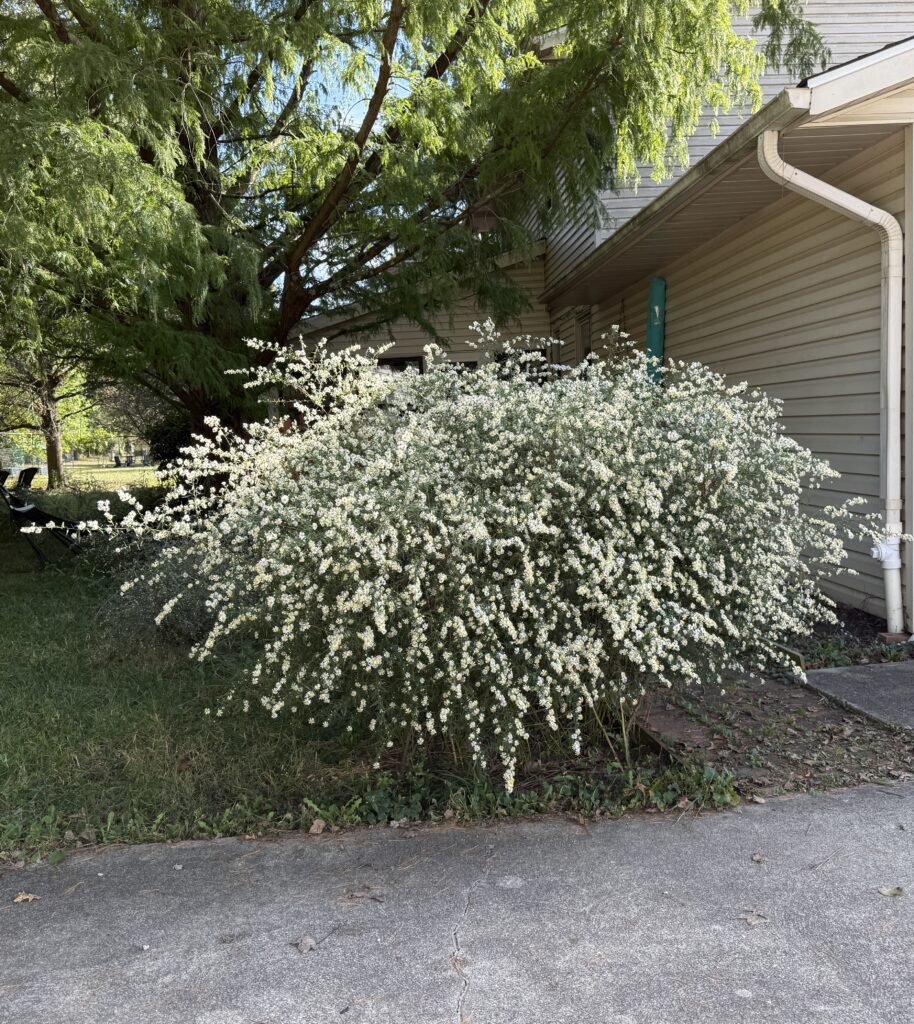
For much of the spring and summer, I mow around these leggy, shrubby plants that look weedy and have no blooms. That’s because I know the payoff is in October. When many of the other blooms are spent and reduced to empty seedheads that the birds eat, the asters are just getting started.
I have at least four varieties of asters in my yard, and I’ve planted none of them. I have moved a few, but all of them arrived on their own, free of charge. I have:
- Calico Asters (some of the flowers have yellow centers and some have purple centers, even on the same branch of a plant)
- Small White Asters (all of the flowers have white petals and yellow centers)
- Hairy White Oldfield Aster (bushier growing habit than the Small White Aster with hairy stems)
- New England Aster (purple flowers, and the flowers are larger than the dime-sizes flowers on the white asters)
I’m not an expert at identifying the difference between the white ones, but I can tell you that they must love acidic soil. The largest cluster I have is so dense it has formed a hedge, and is about six feet wide and six feet deep. This is the one my dog urinates on at least once a day. If you have a dog and want to have wondrously big aster plants, I recommend getting your dog to pee on it!
At this time of year, they smell amazingly sweet and attract bees from all over. Mine even have large numbers of honeybees … so many that I wonder if someone is keeping hives nearby. If so, you’re welcome! There’s plenty of nectar here!